Archives for January 2026

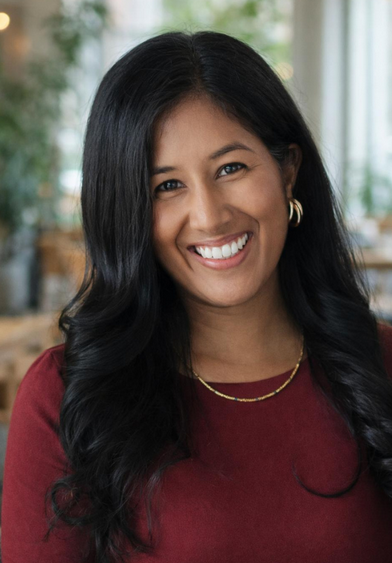
The Ear Community welcomes newest Board Member, Dr. Kripa Raman!

The Ear Community announces it’s newest Board of Directors Member, Dr. Kripa Raman.

“We would like to welcome Dr. Kripa Raman to Ear Community’s Board of Directors, says Melissa Tumblin, Founder and Executive Director of the Ear Community Organization. I have had the honor of knowing Kripa over the past four years. She has already been doing incredible work in our community, helping make connections and advocate for our microtia and atresia families in the Ontario area and all over Canada! I am grateful for her help and her shared passion for helping our children as well as her dedication to our microtia and atresia community!”

Kripa is a mother to two boys in Ontario, Canada. Her oldest son, Jahnu, was born with unilateral microtia and atresia of his left ear. Currently he is unaided and thriving! Kripa has a PhD in Molecular Biology and Genetics from McMaster University. She works in pharmaceuticals leading health economic assessments to secure funding for new therapeutics. Her advanced scientific and healthcare background has been very helpful when navigating the Canadian health care system and advocating for her son. When she is not entertaining the boys, she is planning their next family trip, listening to an audiobook, or trying a new recipe.

Kripa has been the organizer behind the Ontario Ear Community picnic in both 2023 and 2025. For her, these events are all about connection. “Given the rarity of microtia, I felt quite lonely after the initial diagnosis. Balancing new motherhood with those
unknowns was a source of anxiety, but finding the Ear Community online gave me the connection I needed. The picnics are amazing since for many kids, it’s the first time they’ve ever seen little ears like their own. I want my son to know he belongs to a community, and seeing him meet others just like him is so special.”

Board Members for the Ear Community Organization consist of members of the community that include individuals who were born with microtia and aural atresia, family members and medical professionals. “It is important for our community to be informed of all options for microtia and aural atresia, says Melissa Tumblin, Founder of Ear Community. It is also important to hear from parents, like Kripa, and to see how her family journey with microtia and atresia is going. It is incredibly helpful for children and adults and their families to see what others in the community are doing regarding the decisions they make along the way on their journey. This is where advocates can play a big part in helping others understand decisions and choices and also to help give some perspective when talking with others in the same situation”.

“We are looking forward to Kripa joining our board,” said Ear Community Founder, Melissa Tumblin! Our community is made up of amazing advocates and role models and Kripa is already an amazing advocate in our community! We are honored to have her serve on our Board as she continues helping families and community members in Canada who have microtia and aural atresia!”
Melissa Tumblin
Founder – Executive Director
Ear Community
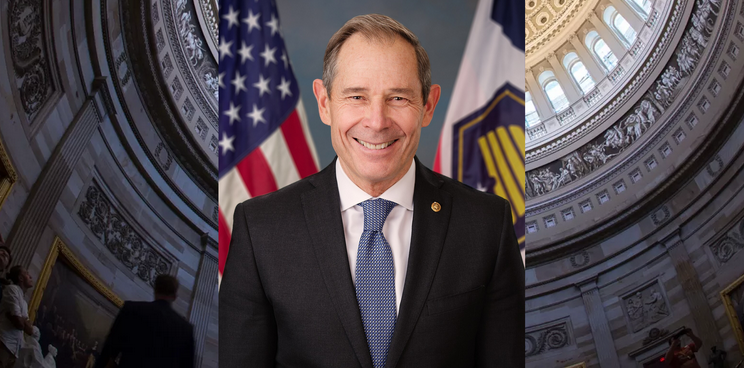
New Bill: Senator John R. Curtis introduces S. 3400: Ally’s Act


By: Quiver LegislationRadar
Dec. 9, 2025 

We have received text from S. 3400: Ally’s Act. This bill was received on 2025-12-09, and currently has 4 cosponsors.

Here is a short summary of the bill:

This bill, known as Ally’s Act, aims to enhance health insurance coverage related to hearing devices and systems by making specific requirements for group health plans and health insurance issuers. It seeks to ensure that individuals with hearing loss receive adequate support and services necessary for their auditory needs.

Key Provisions of the Bill

1. Coverage Requirements

The bill mandates that group health plans and health insurance issuers provide coverage for a variety of services and items related to auditory implant devices, including:

  • Auditory implant devices (e.g., cochlear implants) and external sound processors.
  • Maintenance of these devices.
  • Upgrades or replacements of devices every five years.
  • Adhesive adapters and softband headbands.
  • Repairs of devices.
  • A comprehensive hearing assessment.
  • A preoperative medical assessment.
  • Surgery related to the implantation of these devices.
  • Postoperative medical visits and audiological visits for fitting and activation.
  • Aural rehabilitation and treatment services as deemed necessary.

2. Financial Requirements and Treatment Limitations

The bill includes provisions to ensure that financial requirements and treatment limitations for the mandated services and items are not more restrictive than those applied to other medical and surgical benefits governed by the same health plans. Specifically:

  • The cost-sharing requirements for these auditory services cannot be more onerous than those for other covered medical benefits.
  • There must not be treatment limitations that are more restrictive than those that apply to other medical benefits covered by the plan.

3. Medical Necessity Review

Health plans are prohibited from denying or limiting coverage for any of the items or services identified in the bill that have been deemed medically necessary by a physician or qualified audiologist. This ensures that if a healthcare provider recommends a specific service or device, it will be covered under the health insurance plan.

4. Definition of Qualifying Individual

A ‘qualifying individual’ is defined in the bill as someone who has been determined by a physician or qualified audiologist to require an auditory implant device or external sound processor, based on criteria including degree of hearing loss.

Legislative Process

This bill has been introduced in the Senate and referred to the Committee on Health, Education, Labor, and Pensions for further consideration. It is set to take effect for plan years beginning on or after January 1, 2026, if passed.

Relevant Companies

  • WSO (Watsco, Inc.): As a leading distributor of HVAC equipment, Watsco could experience changes in market demand for hearing services due to this bill impacting health coverage.
  • CSCO (Cisco Systems, Inc.): Involved in various technologies, including those relevant to audiology and telehealth, which might see increased utilization.
  • ADBE (Adobe Inc.): As a provider of software solutions perhaps used in healthcare contexts, they might experience indirect impacts depending on the nature of compliance requirements with new regulations.

 Link to press release.

Translate »