Archives for October 30, 2018

Country singer, Luke Bryan, wears Microtia Awareness wrist band during Detroit concert

Luke Bryan

On October 26th, 2018, country singer, Luke Bryan, wore our Ear Community Microtia awareness wrist band during his concert in Detroit! Our support group member, Katie Davison, gave it to him at his concert and he put our awareness wrist band on!  Katie stated, “Yes!!! That’s Luke Bryan wearing one of the Microtia bracelets!!! We gave it to him at his concert in Detroit and he put it on!!!! #LukeBryan #MicrotiaAwareness #EarCommunity  💙👂💙

Many children and adults and their families, within the Microtia and Atresia community, were absolutely touched that Luke did this!  This meant so much to the children and adults who have Microtia (missing or underdeveloped outer ears) and Atresia (missing or underdeveloped ear canals, resulting in hearing loss) as Microtia and Atresia are both rare congenital birth conditions.  Approximately 500 children are born each year with Microtia and Atresia in the United States (1 out of 6,000).  Many of these children struggle in life with fitting in, having to deal with public stares, and trying to manage their hearing loss.  Everyone just wants to be treated kindly and to be accepted.  This was so kind and supportive of Luke to do this and it touched all of these families hearts.

National Microtia Awareness Day is coming up this November 9th and many within our community are excited to help raise awareness about Microtia and Atresia and to help promote kindness.  On our national awareness day, supporters who embrace our day, help raise both public and educational awareness about Microtia and Atresia including medical professionals, families, audiology and ENT organizations and associations, and hearing device and medical device implant companies.  Again, thank you Luke Bryan for being so kind.  So many of us appreciated what you did in Detroit!
Thank you!

the Ear Community Organization
www.EarCommunity.org
MED-EL USA Obtains FDA De Novo Clearance for BONEBRIDGE™ Bone Conduction Implant System

World’s first active bone conduction implant coming to the U.S. market in 2018

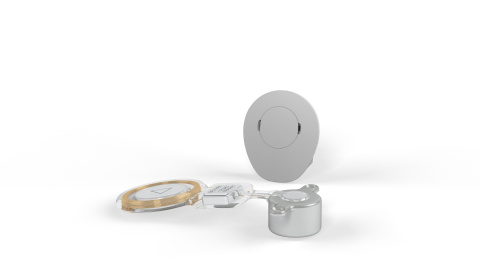
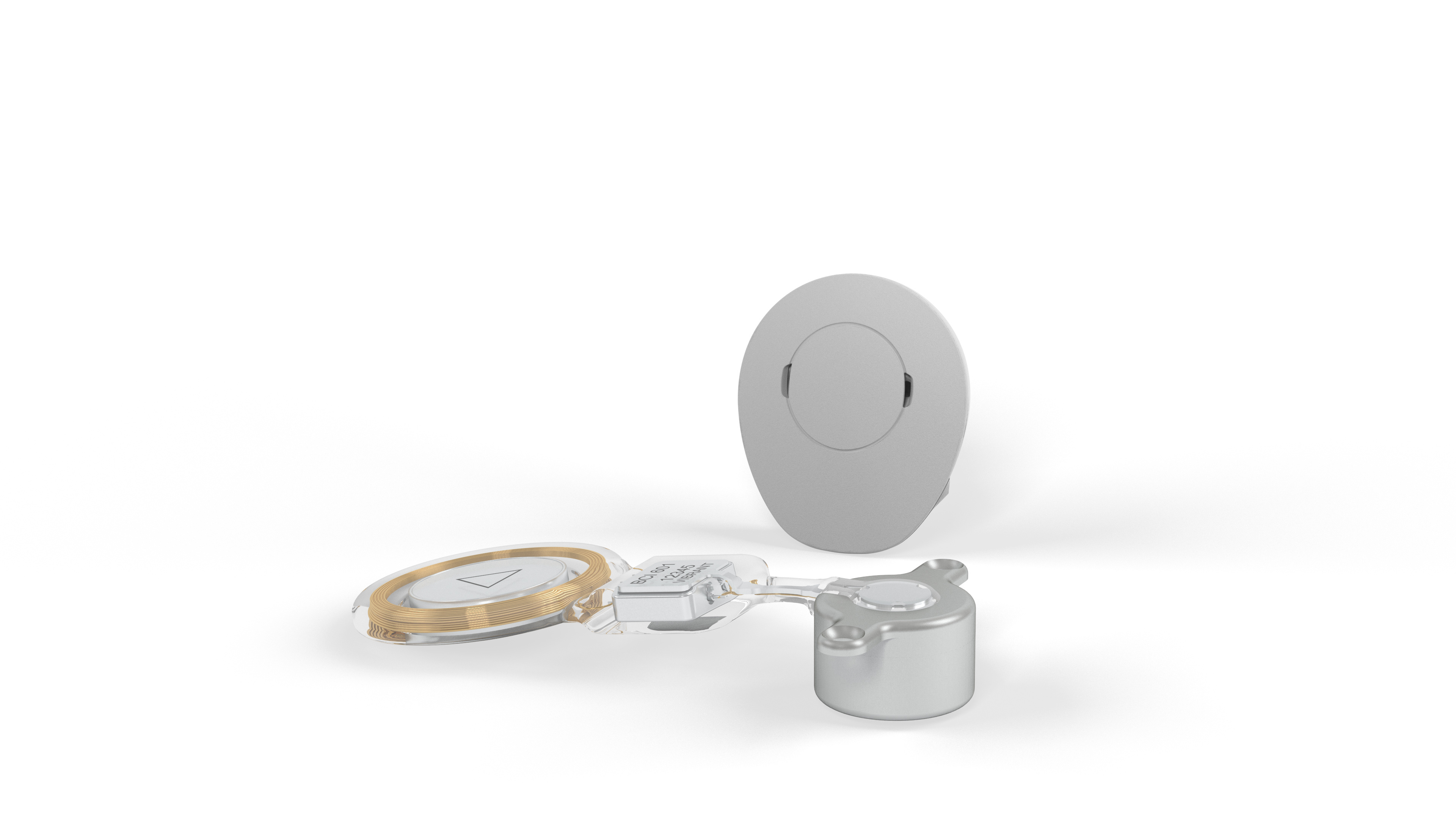
BONEBRIDGE Bone Conduction Hearing Implant System from MED-EL USA (Photo: Business Wire)

BONEBRIDGE Bone Conduction Hearing Implant System from MED-EL USA (Photo: Business Wire)

DURHAM, N.C.–(BUSINESS WIRE)–MED-EL USA announced today that the U.S. Food and Drug Administration (FDA) has granted de novo clearance for the BONEBRIDGE™ bone conduction hearing implant system for individuals 12 years and older who have been diagnosed with conductive hearing loss, mixed hearing loss, or single-sided deafness. Since its introduction in Europe in 2012, BONEBRIDGE remains the world’s first and only active bone conduction hearing implant, and is widely considered a breakthrough in bone conduction technology.

FDA grants de novo clearance for MED-EL USA’s BONEBRIDGE Bone Conduction Hearing Implant System!

Tweet this

BONEBRIDGE consists of two components: the internal BCI 601 implant, and the sleek, award-winning SAMBA audio processor, which can be worn discretely beneath the hair.

Unlike bone anchored hearing aids with an abutment that protrudes through the skin and requires lifelong medical treatment and maintenance, BONEBRIDGE offers intact skin technology. As the implant is placed completely underneath the skin and the audio processor places minimal pressure on the skin, BONEBRIDGE recipients enjoy a low complication rate.

Sound in the environment is captured by BONEBRIDGE’s audio processor, the SAMBA, and is converted into signals which are transferred through the skin to the implant. The implant converts the signal into mechanical vibrations that are transferred directly to the bone of the skull. The bone then conducts these vibrations to the inner ear where they are interpreted as sound, converted into nerve signals and transmitted to the auditory nerve. This process bypasses the non-functioning outer and middle ear, where conductive or mixed hearing loss occurs.

The SAMBA audio processor is equipped with adaptive directional microphones that automatically identify and minimize noise interference. This feature is particularly helpful in situations where there is loud background noise, such as in a restaurant. The Speech Tracking feature enables SAMBA to automatically recognize the direction from which speech is coming and makes the corresponding adjustment to the directionality of the microphone. With the SAMBA remote control, recipients can select one of five programs, each with its own individual settings, for particular situations such as a noisy environment or for television and music. SAMBA processors may be individualized with more than 20 interchangeable color and design covers.

“MED-EL USA is pleased to expand our cutting-edge line of implantable hearing devices to include BONEBRIDGE for conductive hearing loss, mixed hearing loss and single-sided deafness,” said Raymond Gamble, CEO & President, MED-EL North America. “Like all of our hearing implants, BONEBRIDGE is engineered to be future-ready, meaning that recipients will always be able to benefit from the latest external processing technology. We welcome those to the MED-EL family who have lived with these types of hearing loss because they have not wanted to pursue the limited surgical options currently on the market.”

MED-EL USA anticipates that BONEBRIDGE will be available in 2018. For more information about the BONEBRIDGE system, visit www.medel.com, or call (888) MED-EL-CI (633-3524).

About Conductive/Mixed Hearing Loss and Single-Sided Deafness

Conductive hearing loss is caused by problems with the ear canal, ear drum, or middle ear and its tiny bones (the malleus, incus, and stapes). Causes of conductive hearing loss include congenital absence of the ear canal or failure of the ear canal to be open at birth, and congenital absence, malformation, or dysfunction of the middle ear structures. Conductive hearing loss can also be caused by infection, tumors, middle ear fluid from infection or Eustachian tube dysfunction, a foreign body, trauma (as in a skull fracture), and otosclerosis.1 Mixed hearing loss is a combination of a sensorineural and conductive hearing loss. It results from problems in both the inner and outer or middle ear. Single-sided deafness (SSD) is a condition of profound unilateral sensorineural hearing loss, with normal hearing in the better hearing ear. SSD is a severe impairment that makes it hard to understand speech and sounds especially in noisy environments, as well as causes difficulties in determining the direction of a sound’s location.

About MED-EL

MED-EL Medical Electronics, a leader in implantable hearing solutions, is driven by a mission to overcome hearing loss as a barrier to communication. The Austrian-based, privately owned business was co-founded by industry pioneers Ingeborg and Erwin Hochmair, whose ground-breaking research led to the development of the world’s first micro-electronic multi-channel cochlear implant (CI), which was successfully implanted in 1977 and was the basis for what is known as the modern CI today. This laid the foundation for the successful growth of the company in 1990, when they hired their first employees. To date, MED-EL has grown to more than 1,900 employees and 30 subsidiaries worldwide.

The company offers the widest range of implantable and non-implantable solutions to treat all types of hearing loss, enabling people in 121 countries to enjoy the gift of hearing with the help of a MED-EL device. MED-EL’s global portfolio of hearing solutions includes cochlear and middle ear implant systems, a combined Electric Acoustic Stimulation hearing implant system as well as bone conduction devices. www.medel.com

1 Hearing Loss Association of America. Types, Causes and Treatment. Accessed April 26, 2018.

Contacts

For MED-EL USA
Rebecca Novak Tibbitt, 704-341-1544
Rebecca@RNTCommunications.com

Translate »